

Beyond the Six String Nation #45: Dylan v Sparks
aka Hare v Tortoise

I’ve been thinking about longevity lately – and not just because I’m all too quickly approaching the Beatles’ age standard established back in 1967. As you know, we’ve recently set up a not-for-profit company in the hopes that it will help carry Six String Nation to greater success and stability, not just for me but for the life of the project beyond me. As you’ve also heard me bemoan in these pages previously, in spite of an initial flush of attention and seeming success, a series of unlucky turns over the years hobbled the project in critical ways that I wasn’t savvy enough to deal with on my own. Again, I hope that the board behind the new entity can provide the kind of sage and even-keeled direction I couldn’t navigate with only myself at the helm.
I’ve also been thinking about longevity because of three things that came together in my mind in the last few days:
a friend over for a dinner party last weekend reminded/urged me to forge ahead with my vision for the project no matter what since it was at essence a big, world-worthy project that has yet to see its true impact realized;
at the end of the month I have a school booking for a group of students in Aurora from grades 3-8 and I’m always questioning how kids that young will receive me and the ideas behind Six String Nation. Can we see the world similarly – or similarly enough to connect or for me to inspire them in some way?
my knees have been aching lately.
Which is where Sparks v. Dylan comes in.
When Sarah and I got together, we bonded over all kinds of music. It would be unfathomable for me to end up with someone who didn’t care about music very much. Even if our tastes weren’t exactly aligned, a recognition of the power of music in our lives is the real foundation we build so much else around. If I were to pick one or two artists who were emblematic of where we were coming from at the time, for Sarah it would be Bob Dylan and The Band. For me it would have been Brian Eno and New Order. In fact, mutual recognition of these artists is built into our wedding vows, which we uttered ten years later.
Now, it’s not as if Sarah necessarily needed me to introduce her to Eno and all the Manchester bands and I certainly knew my way around a handful of Dylan and Band records. It’s just that ours weren’t each other’s defining north star artists. And it’s fair to say that each of our respective appreciations for the other’s music deepened with a little gentle guidance. Not that we were each willing to go all in. Sarah, for example, seemed to draw a line at Genesis. And when she took me to the Air Canada Centre to see my first Dylan show I was unimpressed: a guy standing profile at a keyboard like he was in Josie & the Pussycats playing 12-bar blues versions of some of his songs while not once addressing his audience. Yawn.
Nonetheless, Dylan is a kind of god… as is Eno. Each has achieved near-mythical status in careers that span decades and genres and the farthest extremes of popularity and obscurity. Each has impacted the broader culture in profound ways far beyond the mere influence of their music catalog and each has ventured far outside their perceived lanes to explore other artistic and media practices. Both are authors and critics and filmmakers and painters. And both are surrounded by a kind of mystique. I would argue that Dylan leans into his mystique more than Eno, who is a bit more publicly engaged. Sometimes I wonder if Dylan has simply succumbed to his.
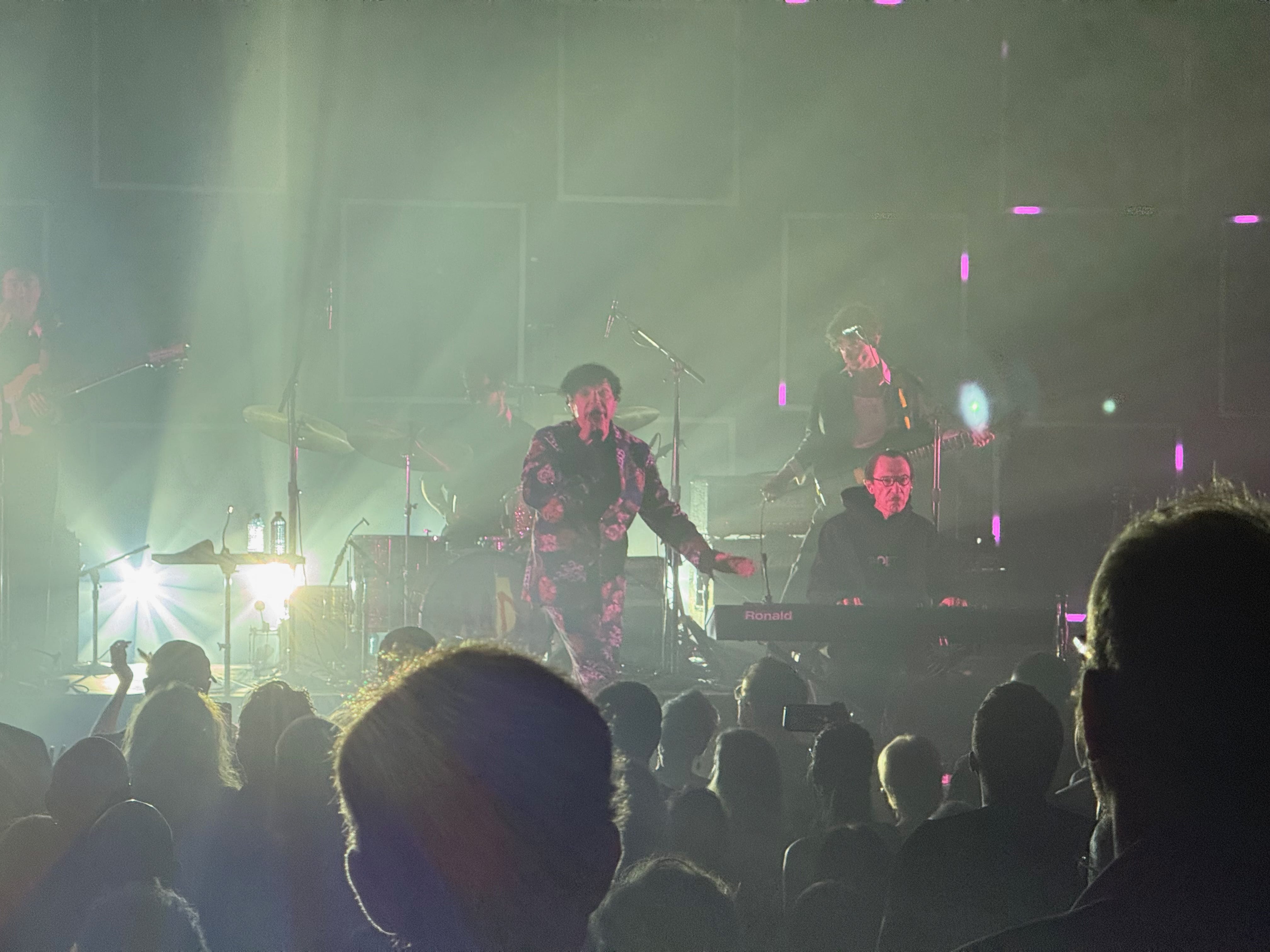
So Sarah and I each absorbed some of the musical enthusiasms of the other and while I still wouldn’t say I have a deep, encyclopedic knowledge of Dylan, I would definitely say I’m a pretty well-versed fan. Sarah certainly recognizes Eno’s imprimatur on various records and has even become an unwitting fan of Genesis (by virtue of being a fan of Elbow 😉) The one band that I did introduce Sarah to that she has taken to as an unabashed fan, is Sparks. I bought their third and fourth albums, Kimono My House and Propaganda, when I was 12 and promptly displayed my completist tendencies by going back and getting their debut album as Halfnelson and their first proper Sparks album - A Woofer in Tweeter’s Clothing right away. So, as a well-seasoned fan, I took Sarah to see their brothers+electronics incarnation at Lee’s Palace on November 2, 2013. To be honest, I was surprised at how much she enjoyed the show. It was just Ron and Russ, totally stripped down with drum machine and synth - none of their glam-inflected excesses. But from that day one, Sarah was a die-hard fan. We’ve now seen them a bunch of times - including once at the Royal Albert Hall in London.
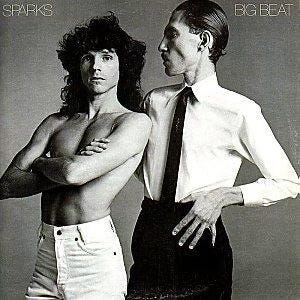
It’s kind of fitting that Sarah has taken to Sparks so enthusiastically. My dad died eight-and-a-half years before I met Sarah but they would have bonded over Sparks. Dad pretty much kept to his Joplin and Waller and Gershwin and showed no interest in the music spilling out of my teen cave. But in 1976, while I was cranking out their sixth album, Big Beat, dad popped his head in the door and said “What’s this?”. I might have guessed he’d do that. Apart from the aforementioned piano masters, one of dad’s other great gifts to me was the comedy of the French director Jacques Tati. I’ll never forget dad literally falling out of his seat and crawling on the cola-soaked cinema floor with laughter during a screening of Tati’s Trafic while we were on a Maritime family holiday. So imagine my thrill at being able to tell dad about the forthcoming collaboration between Sparks and Tati to be titled Confusion. Sadly, Tati died before the project really got off the ground, though the title track appears on Big Beat.
But I was thinking about all of this partly because of a recent appreciation in Paste Magazine for Bob Dylan’s twenty-eight studio album, Street Legal (1978), which posited that Bob was in a mood following the critical and commercial failure of his experimental film, Renaldo and Clara, earlier that year. The film, its failure and Bob’s retreat from filmmaking are all part of the sometimes ponderous lore surrounding Dylan. Now, don’t get me wrong – Bob Dylan is a true giant. His contribution to the culture is immense and he owes no explanations or excuses for anything. His personal reclusiveness (in spite of constant touring). compounded by Nobel Prizes, painting collections, sculpture installations and multiple biopics, simply adds layers upon layers to the enigma that is Dylan. Dylan, the person, recedes further and further from view while his extraordinary body of work assumes a kind of immortality. That’s all well and good. We should know artists by their work and the picking over of biographical minutiae for clues about the work often feels at least partly like a violation. Bob is 84 now and will no doubt die on tour some day, at which point the perception of his immortality will be only briefly broken. But it does mean that something as simple as disappointment over a creative failure gets this kind of halo around it as time goes on. It gets folded into the assessment of subsequent works (not unreasonably) while the sense of a common humiliation visited on a regular human being is minimized. This is the formula for the making of mythology.
Ron Mael, the older of the Sparks brothers and the band’s principal writer, is himself now 80 and also still on tour (though he seems to do his signature dance interlude for shorter periods these days!). Russ, the heartthrob, turns 77 in a couple of weeks and still leaps around the stage like a much younger frontman. But in spite of a well-documented career arc with all the usual successes and disappointments, nothing about their story rises to the level of mythology. The relationship of an audience of Sparks fans to their idols is completely different to the relationship between Dylan and his audience – many of whom I don’t think are actually fans but merely tourists who are trying to cross “Bob Dylan live” off their “bucket list” (I know this for a fact because I actually heard some private-box bros say it out loud when we saw Bob’s Americanarama show with Wilco and My Morning Jacket a few years ago). When we saw Sparks on April 2, 2022 – just emerging from pandemic restrictions – they sent an email to everyone asking if people would kindly continue masking as they were now vulnerable septuagenarians. Everyone in the audience complied because the relationship is so personal with these two brothers.
Sparks’ first record was produced by Todd Rundgren, their fourth by Tony Visconti, which immediately puts them in a certain orbit. Within a couple of years they were featured on Dick Clark’s American Bandstand and Britain’s Top of the Pops. But in spite of that initial momentum, Sparks never quite clicked into the mainstream. Instead, their career trajectory has been far more interesting. Their unique voice and clever lyrics have persisted through countless stylistic changes in direction and their audience has stuck with them – sometimes swelling in France or Germany or the U.S. or re-surging in the UK. Edgar Wright’s loving documentary, The Sparks Brothers (2020) was a critical success and revealed for Sparks fans that the band they love is loved as deeply and impactfully by legions of other artists they also love. And while fate quashed their collab with Tati, it opened its arms to their rock opera, Annette - starring Adam Driver, Marion Cotillard and a marionette and directed by another giant of French cinema, Leos Carax, which opened the 2021 Cannes Film Festival and earned the brothers a CESAR (the French Oscar) for best score. Cate Blanchett appeared in their 2023 video for the song The Girl is Crying in her Latte and last year she danced with them onstage at Glastonbury. None of these successes has lit the world on fire and any failures along the way have made even fewer critical waves. Everything about their work has been at an entirely human scale. And so, modest numbers of well-behaved and entirely genuine fans unfailingly show up to their concerts at mid-tier venues and buy their latest albums and follow their polite and personal Instagram posts and eagerly anticipate their forthcoming collaborations with Gorillaz and Self-Esteem and director John Woo and enthusiastically pose for the band’s selfie-from-the-stage at the end of each show because they feel like part of the family.
When I think about what kind of success I could possibly hope for for Six String Nation, it looks a lot more like Sparks than Bob Dylan and, when I think about it, it’s the kind of relationship with the audience that the project itself invites: deep and rich and humble and never taken for granted.
Nothing better than a morning cup of coffee and a visit with the musical mind and heart of Jowi Taylor. You should do a radio show, you'd be good!
Smooth and without a ripple!
And
“ You have mail!”